Ask what makes a good neck gaiter and the honest answer is the fabric, because everything a gaiter does well or badly comes from the cloth it is cut from. A thin sun-blocking tube and a warm winter fleece neck gaiter can look almost identical flat on a table, yet they behave like completely different products in use. If you are choosing one to wear, or specifying a custom run to print, it pays to compare the fabrics on the numbers that actually matter: weight, warmth, sun rating, and whether your design can be printed on them at all.
The fabric decision starts with temperature
Gaiter fabrics sort themselves out by weight, measured in grams per square meter, and weight maps closely to how warm the tube feels. The lightest and most common gaiter cloth is moisture-wicking microfiber polyester in the range of about 140 to 160 gsm, thin enough to breathe in summer heat and pull sweat off the skin. A midweight polyester jersey around 180 to 200 gsm adds a little more coverage for shoulder seasons without becoming hot. Merino wool sits in a similar weight band but trades differently: it holds warmth better for its weight and resists odor over multiple wears, which is why it dominates cold-weather travel. At the top end, polyester fleece around 250 to 300 gsm is built purely for cold, trapping air against the neck for skiing and winter work. The chart below lines these up so you can see the jump from a summer tube to a winter one.
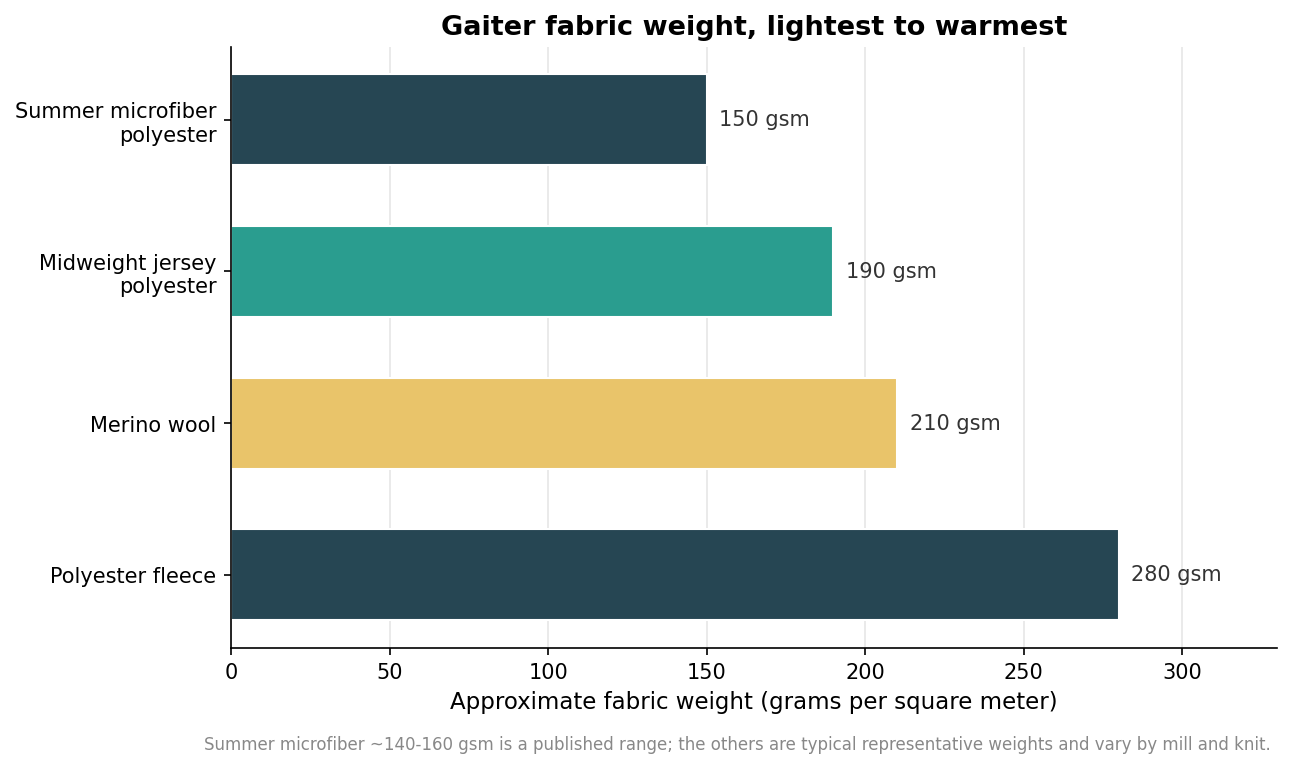
The practical takeaway is that no single gaiter covers every season. A 150 gsm sun tube will not keep you warm on a chairlift, and a fleece will cook you on a July hike. Buyers who need year-round coverage are really buying two products.
What UPF actually measures
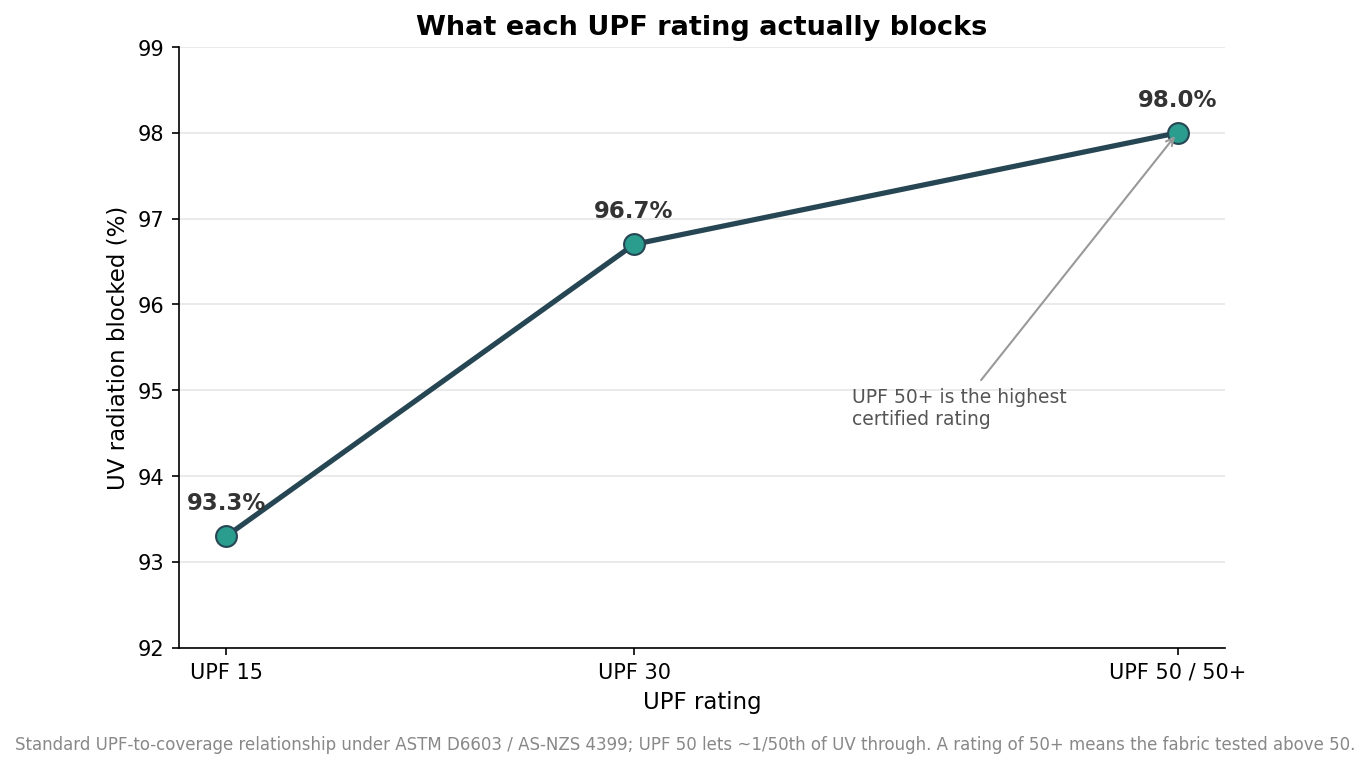
For any warm-weather or water gaiter, the sun rating is the headline spec, and it is more precise than most people assume. UPF, or Ultraviolet Protection Factor, tells you what fraction of ultraviolet radiation the fabric blocks. A UPF 50 rating blocks about 98 percent of UV, letting only one-fiftieth reach the skin, and UPF 50+ is simply the highest certified step, meaning the fabric tested above the 50 threshold under the ASTM D6603 and AS/NZS 4399 standards. A UPF 30 fabric still blocks close to 97 percent, so the gap between tiers is smaller than the numbers suggest, but for a full day on the water the top rating is worth it. The chart below shows how the ratings translate into actual coverage.
Two caveats matter when you buy. Tightly knit synthetic fibers like polyester and nylon carry the highest and most stable ratings, while cotton and cotton blends can lose much of their UPF when they get wet, exactly when a fishing gaiter is soaked with spray and sweat. The good news is that a quality synthetic UPF rating holds up through 50 or more wash cycles before it starts to degrade, so a well-made sun gaiter protects for seasons, not weeks.
Which fabrics you can actually print
This is where a custom order narrows the field, and it surprises a lot of first-time buyers. Full-color, edge-to-edge custom graphics on gaiters are almost always produced by dye sublimation, a process where the ink turns to gas under heat and bonds into the fiber itself. That bond only forms with synthetic polymers, so sublimation needs polyester, ideally 100 percent and at minimum around 65 percent, to reproduce vivid color. Cotton and wool cannot be sublimated directly because the dye has nothing to bond to and the print washes out, and poly-cotton blends come out muted and vintage-looking. Because sublimation inks are translucent and cannot lay down white, the base fabric has to be white or very light for colors to stay true. The upside is durability: a sublimated design becomes part of the cloth, so it will not crack, peel, or fade the way a surface print does, surviving repeated washing. The practical rule for custom work is simple: if you want a bold all-over print, specify white 100 percent polyester, and understand that a merino or dark gaiter is a stock-color product, not a full-color canvas.
Matching fabric to how it will be used
With weight, UPF, and printability in view, the use case chooses the fabric. Anglers, paddlers, and anyone working in direct summer sun want light microfiber polyester with a UPF 50+ rating, because coverage and moisture management beat everything else there. Runners and cyclists want the same light poly for breathability but rarely need the maximum sun rating unless they train midday. Skiers, snowmobilers, and cold-weather crews want polyester fleece for raw warmth, accepting that it is bulkier and not a print surface. Long cold days where you sweat and then chill, common in hunting and backcountry travel, favor merino wool for its warmth-to-weight and odor resistance, at a higher price and with no full-color printing. Team, event, and promotional buyers almost always land on white polyester because it is the only fabric that carries a custom design cleanly.
Specifying a custom bulk order
When you move to a branded run, put the numbers in the spec so the sample matches the intent. State the fabric weight you want in gsm, since “polyester” alone can mean a 150 gsm sun tube or a 300 gsm fleece. If sun protection is a selling point, ask for the tested UPF rating rather than a vague “UV” claim, and confirm it is rated on the synthetic fabric you are ordering. For full-color artwork, specify white 100 percent polyester and supply high-resolution files, because sublimation reproduces fine detail but only as well as the file allows. Finally, plan care instructions into the product: cold wash, no bleach or fabric softener, and air or low-heat drying keeps both the UPF rating and the printed color intact. Nail the fabric weight, the UPF number, and the polyester base, and the gaiters you receive will do the job you pictured, in the season you bought them for.